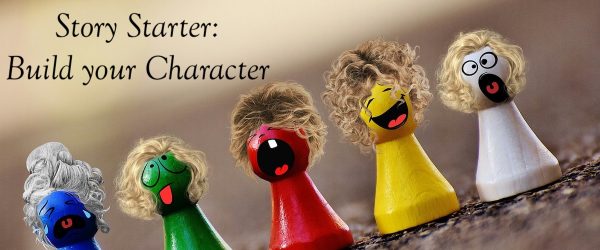
To all the young writers whom I'd hoped to meet at a workshop this spring or summer (cancelled due to Covid-19)... If you're stuck at home with a pen handy, why not start a story or ten? Don't know how to begin? I'll take you through five easy entry points over the coming weeks. (Kind of… Continue reading Young Writers Workshop: Know your Character
Category: friday form
Young Writers Workshop: Setting Exercise
I’ll be giving a writing workshop tomorrow at the Carlingwood Library to help kids aged 9-12 prepare their stories for the Ottawa Public Library’s Awesome Authors Contest. We’ll do two story-building exercises: one on Character, and one on Setting. For those who can’t be there, here is my Setting handout, with a short version of… Continue reading Young Writers Workshop: Setting Exercise
He Said/ She Sighed Part 3 – Enough Already!
Here’s one last rant sparked by a “how to write fiction” book that advised using “said/say” as the only dialogue verb (as in, "'I spent thirty dollars on jelly beans at Mont Tremblant this weekend,' she said.") (That is a true statement, sadly. They fool you with the $2.99/100g sign. I still think in pounds. "Grab a bag each,"… Continue reading He Said/ She Sighed Part 3 – Enough Already!
He Said/She Sighed Part 2
I grabbed twenty books from the living room shelf, opened each to a random page, and checked out all the verbs used in dialogue. And here is what I learned: Almost all the authors used a simple “said” at least half the time. But none of them used said all the time. None. Not one.… Continue reading He Said/She Sighed Part 2
He Said/She Sighed – Part One
I dislike lists of rules for writing fiction. There are many good writers whose work I can’t stand. And many books I’ve loved that were obviously flawed. I would not advise anyone to make a paint-by-number novel. Big picture rules are good, like: A book should spend more words on important scenes and fewer words… Continue reading He Said/She Sighed – Part One
