
Following are some of my most successful Writing Workshops. Be sure to check out potential sources of funding. And don’t hesitate to ask for something you don’t see here — I love developing new workshops.
Whether you want one “Story Starter” workshop in your library or several days of workshops to get all the students in your school writing stories, contact me to ask about availability.
Five Ways to Start a Story

Conquer the blank page! This workshop leads participants through exercises to launch stories with a character, a setting, an object, a word prompt, and a fill-in-the-blanks instant plot. Some exercises are done alone, in pairs, or aloud as a class, as time permits.
You’ll never be able to say, “But I have no ideas!” again.
This workshop is adaptable for all ages and all levels of experience and ability. It takes at least 60 minutes; classes with less time can opt for Three Ways to Start a Story.
Freewrite into Fiction

Starting with a blank page and a prompt, participants will draft several freewrites, then scour them for a nugget of genius to transform into a story.
Typically, the prompts are thematic (discussed in advance). I’ve had great success with groups that start from memories, e.g., real-life settings, characters, and emotions. Other starting prompts could be historical facts and characters, first lines, imagery, current events, random words, or objects.
This workshop includes mini-lessons on how to launch from the prompt into fiction and how to expand the prompt work into a complete story.
The workshop is perfect for those afraid to begin — or those who think they need a year on a desert island to write their story. It’s also suited to those who are stuck at the beginning or need to see an old work in a new way. Writers willing to share their work (with me, with all, or with a partner) will get the most from it.
Knowing and Showing Character
Following a mini-lesson on characterization, participants make a character profile, then learn to show that character to readers through thoughts, dialogue, description, and action. (Because you can’t attach a character profile as an addendum to your story.)
This is followed by either
- a mini-lesson on setting, a quick setting sketch, and the writing of an opening scene in which your character arrives, flees, or hides in the setting; or
- an object prompt to create sensory awareness and the writing of a scene in which your character finds, loses, or uses the object.
The goal of either option is to bring your character to life in a scene with concrete details and action and, through writing, to develop your story and your narrative voice.
This workshop can be adapted for any age, even the youngest writers, and it can serve as the first of a two- or three-part short-story workshop series.
Short Story Workshop Series
A series of three workshops takes students through the entire process of writing a short story. Each workshop includes mini-lessons and writing exercises, with some time for sharing.
- Invent characters and settings, identify your narrator, and draft your opening line;
- Develop plot, build tension and conflict, write in scenes, and end with emotional impact;
- Evaluate your work, give feedback, and revise both structurally and line-by-line.
Ideally, students will have one extra class with a teacher, or some time on their own, to work on their stories between the second and third workshops. Teachers sometimes email me student stories in advance of workshop 3 to allow time for more thorough feedback. (Details to be worked out in advance.)
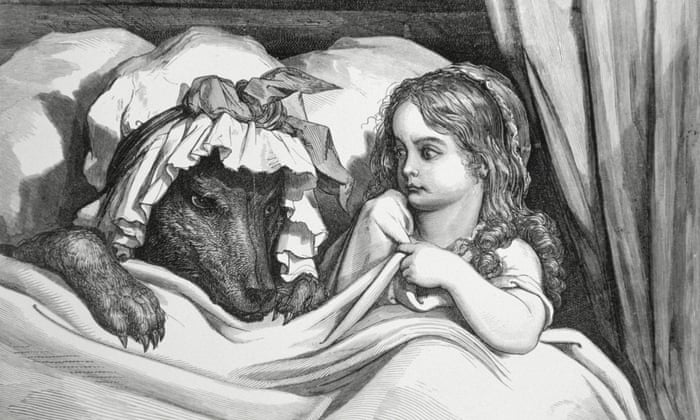
I follow the same basic 3-part pattern in my workshop series “Fracture a Fairy Tale” and “Write an Original Myth,” but with more introductory material to acquaint students with fairy tales or myths, and with mini-lessons and exercises that are appropriate to the genre.
This same pattern can be applied to any genre that suits your curriculum goals, e.g., “Write a Memoir,” “Write a Climate Change Story,” “Write a Fable,” etc. (I love to research and develop new workshops, so don’t be shy to ask for what you need.)
The basic pattern of short story workshops remains:
- understand the genre–>
- identify characters and settings –>
- draft openings to establish narrative voice and point of view –>
- dig for plot ideas –>
- create engaging scenes –>
- end with impact –>
- revise for clarity and beauty.
Team Workshop: Character-Driven Plots

Create your characters, then set them free to wreak havoc or save the day. This workshop leads participants through exercises to build a character or two, really get to know them, then combine them in group stories based on a selection of established premises. How it all turns out is up to the characters. Character is destiny, after all.
Participants will learn the cause-and-effect relationship of characters and plots, and how to tinker with both to create more exciting, believable, and emotionally resonant stories. (Or they’ll just crack themselves up with the team plotting exercise.)
This workshop works best with grades 5+.
Revision
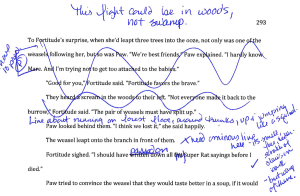
We tend to think of drafting as “writing” and revision as something else, but it’s through revision that the real craft of writing is learned. This workshop leads participants through story-level, scene-level, and line-level revisions, with exercises to enhance sensibility and evaluation skills, hone scene-crafting techniques, and declutter language to reveal a story’s essence.
This workshop has a lot of talk to illustrate its points, so it’s best for more experienced writers (high school students, creative writing classes, or adult writing groups) who have already drafted at least one story.
This workshop also works well as the third workshop in a short-story series.
Workshop Details
School Workshops are best suited to grades 3-12, typically one class at a time (up to 30 students). They can be 45 minutes to 2 hours long. They can follow an Author Presentation or stand on their own. (When I visit classes in grades JK-2, I usually offer a 30-minute interactive presentation followed by a 15-minute writing and illustrating exercise.)
Typically, I schedule a day of workshops at any given school and visit up to 3 classes per day (delivering the same or different workshops — no need for all the classes to be at the same grade level).
A series of 3 workshops is typically scheduled over several days or weeks and works best when tailored to the teacher’s lesson plans and curriculum goals.
Schools with ArtistsInspire funding have the option of a 3-day workshop series with 2-3 classes followed by a full-day event that could involve the entire school. (We could podcast your stories, illustrate them, read them aloud, or combine them into mega-stories.)
All of my workshops are guided by a slide show and include mini-lessons on relevant aspects of fiction (e.g., characterization, point of view, etc.). I typically bring handouts to steer the writing exercises, and I always allow time for sharing and feedback. (No one ever has to share if they don’t want to.)
My online workshops for any age are conducted by Zoom or Teams, can accommodate a writing group of almost any size — I encourage idea-sharing via the chat function — and are ideal in 90-minute segments. If desired, I can send handouts in advance for teachers to print as they see fit.
I do not grade student work. I encourage, guide, and give constructive feedback. I support students in saying what they have to say to the best of their ability. I allow for different learning styles, and I’m open to any genre students are interested in creating, including graphic narratives or hybrid pieces. Any class will have more or less fluent writers in English, but every student is able to create a good story. My favourite moment in any workshop is when a student is surprised by their own creativity.
If you’re not able to have me into your venue, try one of my do-it-yourself writing workshops on your own, or check out my tarot prompts for writers for more ideas to get you started.
 Catherine Austen